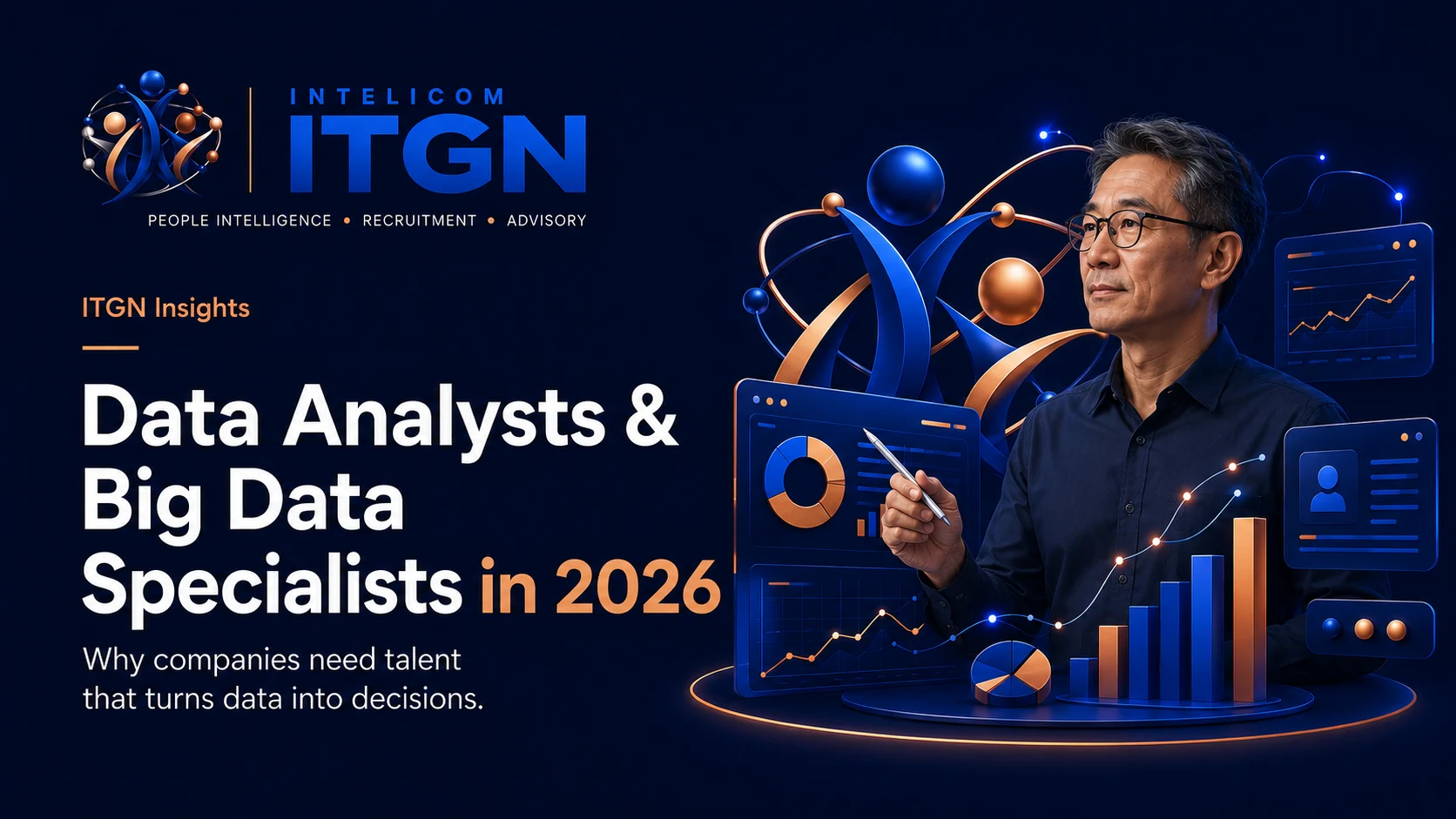
Data intelligence careers are becoming more important in 2026 because businesses are under pressure to make better decisions faster. The need is not only for dashboards or raw data processing. Employers want people who can turn information into context, reveal patterns, improve visibility and help teams act with more confidence.
Why data intelligence roles are growing
Organisations generate more information than ever, but value comes only when that information becomes usable insight. That is why data analyst, business intelligence analyst, reporting specialist and adjacent decision-support roles remain highly relevant. AI tools can accelerate analysis, but they do not eliminate the need for professionals who understand data quality, business logic and stakeholder needs.
In many businesses, better data intelligence improves commercial performance, operations, customer retention, workforce planning and risk management. This makes the role valuable across sectors, from technology and retail to finance, healthcare and professional services.
What data intelligence professionals do
- Collect, clean and structure data from multiple sources.
- Build reports, dashboards and business views that people actually use.
- Interpret trends, anomalies and performance movements.
- Partner with business teams to understand the real decision need.
- Support forecasting, planning, segmentation and process improvement.
- Improve confidence in metrics definitions and data consistency.
Most valuable skills in 2026
Successful data intelligence candidates typically show a combination of technical literacy and business understanding. Commonly valued skills include:
- SQL and strong data manipulation capability.
- Excel or spreadsheet fluency for practical analysis and validation.
- Power BI, Tableau or similar business intelligence tools.
- Data storytelling and communication for non-technical audiences.
- Understanding of KPIs, performance management and business processes.
- Basic statistics and analytical thinking.
- Attention to data quality, governance and interpretation risk.
How candidates can stand out in data intelligence hiring
Employers are often frustrated by profiles that show tools but not impact. The best candidates demonstrate how their analysis changed something: a decision, a process, a forecast, a customer result or an operational outcome. Portfolio samples can be useful when anonymised correctly. So can case studies, problem-solving examples or experience explaining insights to senior stakeholders.
A strong differentiator in 2026 is the ability to work between business teams and technical teams. People who can understand the commercial question and shape the data response are especially valuable.
What employers should remember
Data intelligence hiring works best when the role is linked to a decision context. Are you hiring for reporting speed, forecasting quality, customer insight, management visibility or operational control? The answer shapes the right profile. Some roles need more dashboarding depth. Others need stronger analytical problem-solving or business partnering.
It also helps to test for interpretation skill rather than only technical output. A candidate who can explain what the numbers mean, what they do not mean and what should happen next is usually more valuable than a purely technical executor.
SEO FAQ: data analyst and BI careers in 2026
Are data analyst jobs still in demand in 2026?
Yes. Data analyst and business intelligence roles remain highly relevant because organisations still need trustworthy insight and better decisions.
What is data intelligence?
Data intelligence refers to turning raw information into usable insight, context and action through analysis, reporting, interpretation and decision support.
Do AI tools replace data analysts?
No. AI tools can increase speed, but businesses still need professionals who understand data logic, business context and responsible interpretation.
Final thought
In 2026, data intelligence is not just a reporting function. It is a business capability. Candidates who can connect numbers to meaning will remain in demand, and employers who recruit for decision impact will get better results.